2026-11-11 ·
How Ice Dams Damage Michigan Roofs
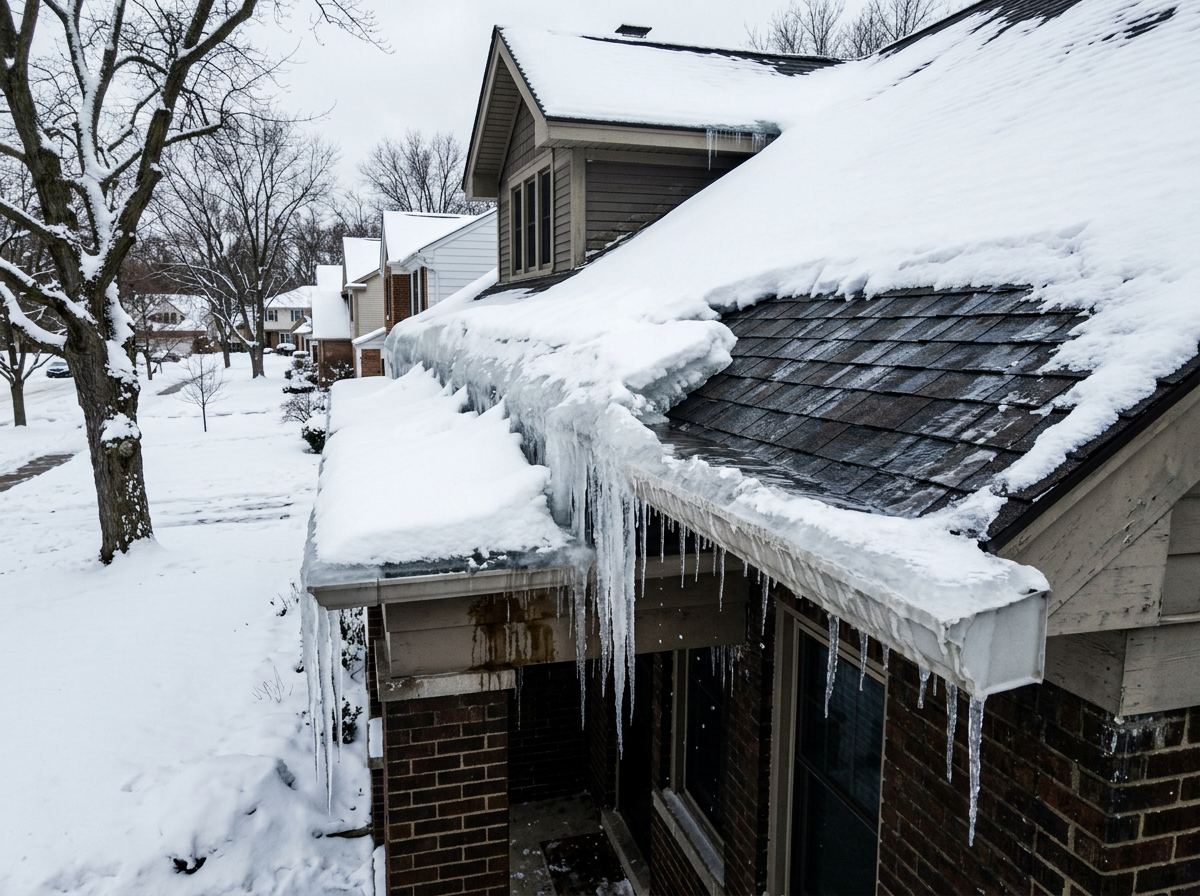
Ice dams damage Michigan roofs by allowing meltwater to seep beneath shingles and into the layers below, creating leaks that reach attics, ceilings, and wall cavities in Troy and surrounding Oakland County neighborhoods.
Ice Dam Formation During Oakland County Winters
Troy sits in a humid continental climate where winter temperatures regularly drop below freezing after daytime thaws. Heat escaping from living spaces warms the upper roof deck while the eaves stay cold, turning runoff into solid ice along the gutter line. The ice builds a barrier that holds back additional meltwater, which then finds its way under the shingles. Homes near the Rochester Road Corridor or close to Somerset Collection often show this pattern first because their roof orientations catch both sun and shade in quick succession. Once the dam reaches several inches thick, pressure forces water sideways rather than letting it run off.
How Water Penetrates Shingles and Underlayment
The backed-up water works under the shingle tabs and saturates the felt or synthetic underlayment. In older Troy roofs this underlayment can be thin or brittle, allowing moisture to reach the plywood deck within days of repeated freeze-thaw cycles. From there the water travels along nail holes and seams, dripping into the attic insulation. Over multiple storms the constant wetting and freezing loosens granules on asphalt shingles and lifts edges, widening the path for the next thaw. Property owners along Big Beaver or near Oakland Mall notice stains on ceiling drywall first because the water follows rafters inward from the eaves.
Impact on Attic Insulation and Framing
Saturated insulation loses its R-value and begins to compress, creating cold spots that encourage more ice dam growth the following week. Wood rafters and sheathing absorb moisture, leading to cupping and eventual rot if the cycle repeats through February and March. In neighborhoods such as those bordering Birmingham and Royal Oak, many homes built in the 1970s and 1980s have limited attic ventilation, which keeps the roof deck warmer and accelerates the same process. Prolonged exposure also rusts metal flashing around chimneys and skylights, compounding the entry points for water.
Visible Signs Homeowners Can Check
Look for long icicles hanging from gutters after a daytime thaw, especially on the north-facing slopes common in Troy subdivisions. Dark streaks or granule loss along the lower three feet of shingles often mark where water has been forced upward. Inside, brown water rings on bedroom or hallway ceilings near exterior walls indicate the leak path. Checking the attic after the next cold snap can reveal damp insulation or frost on the underside of the deck before ceiling damage appears.
Next Steps After Ice Dam Discovery
Homeowners who find active leaks should document the affected areas and contact a local roofer familiar with Oakland County winters. Ice dam damage repair addresses the immediate water intrusion while roof leak repair restores the compromised sections. Reviewing the full roof condition helps decide whether targeted fixes or a broader roof replacement makes sense for the coming seasons. Additional reading on timing appears in When Should Troy Homeowners Replace Their Roof and comparisons of shingle types suited to Michigan winters in Architectural vs 3-Tab Shingles for Michigan Winters.