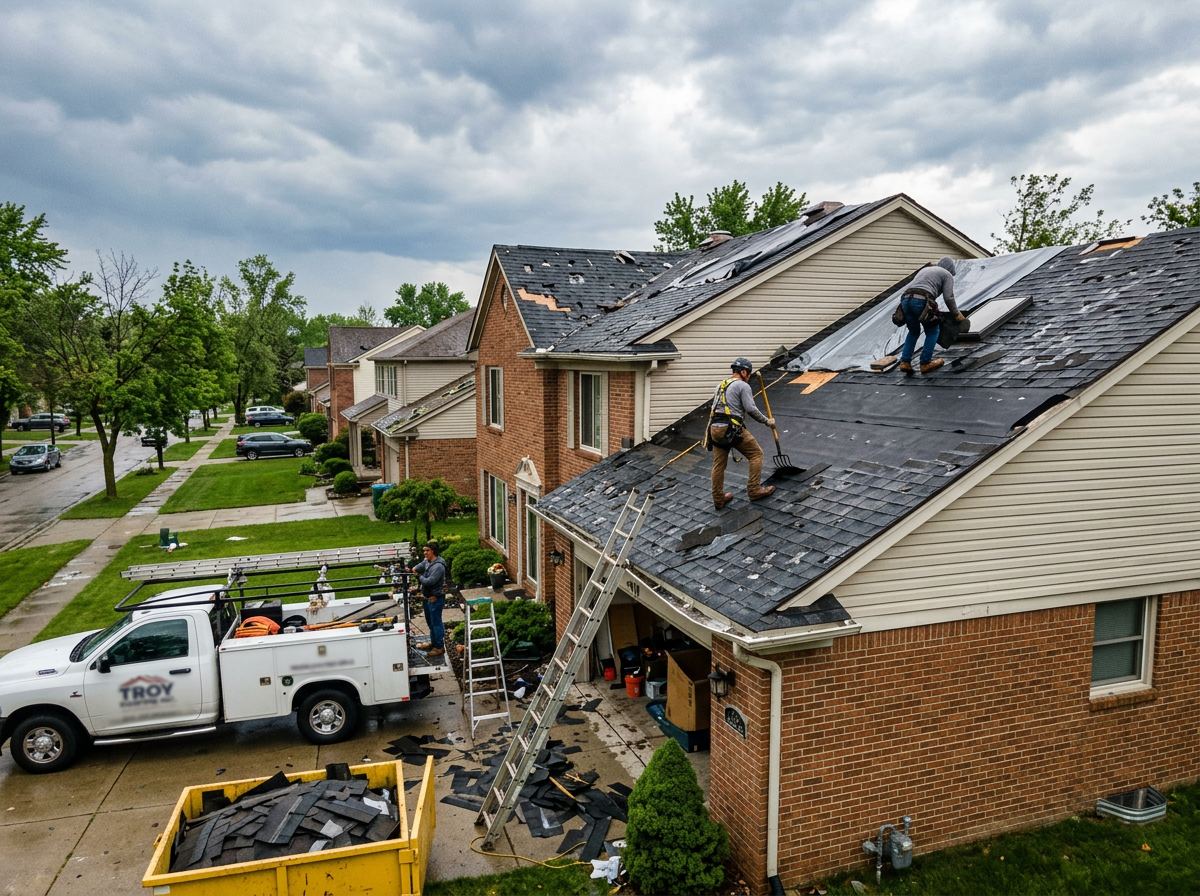
Troy roofs in subdivisions along Big Beaver and the Rochester Road Corridor often face hail impacts that create granule loss and curling shingles, while freeze-thaw cycles allow water to penetrate underlayment and ice dams form along eaves near soffit intake areas. Mature trees around 1960s-1990s colonials and ranches drop limbs during high winds, stressing valleys and step flashing on second or third asphalt layers. These conditions combine with humid continental winters to push moisture under drip edge and pipe boots, accelerating decking deterioration in neighborhoods near Somerset and Oakland Mall.
Inspection starts with a ground-level and attic check for granule accumulation in gutters, soft spots in decking, and displaced ridge vent sections before any tear-off begins. Work proceeds by removing damaged layers, installing fresh ice and water shield in vulnerable valleys, and fitting new architectural shingles with proper step flashing around chimneys and vents. Crews pay close attention to HOA rules in Troy subdivisions while ensuring soffit intake remains clear to maintain attic airflow after the job.
Wind-driven rain and hail hit exposed roof planes hardest on homes near Troy Historic Village and the Somerset Collection, where older asphalt often shows granule loss first. Technicians map hail patterns across the entire surface rather than patching isolated spots, then replace affected sections with matching materials to preserve roof uniformity. This approach accounts for the layered history of many local roofs and prevents future ice dam issues once temperatures drop again.
Technician insight
In Troy the thing that catches most people out with Storm and Hail Damage is how quickly ice dams form on second-layer roofs once mature trees block afternoon sun along north-facing eaves. Homeowners often miss the soft decking under the valley until the next freeze-thaw cycle lifts more shingles. Checking the attic for daylight at pipe boots before any tear-off changes the scope of work on these 1970s ranches.
Wind and hail on a Rochester Road colonial
A Troy homeowner noticed granule buildup in gutters after a spring storm. Inspection revealed lifted shingles along the east valley and moisture stains in the attic near step flashing. Crews performed a targeted tear-off of the damaged section, replaced underlayment with ice and water shield, and reinstalled architectural shingles matching the remaining roof. The home passed the next heavy rain without further intrusion.
Storm and Hail Damage Services We Offer
✓Hail Impact Assessment
Detailed surface and attic evaluation identifies granule loss and hidden decking damage from hail strikes common along the Rochester Road Corridor.
✓Ice Dam Mitigation
Targeted removal and underlayment upgrades stop water intrusion at eaves where freeze-thaw cycles affect Troy colonials and ranches.
✓Wind Damage Repair
Re-secures lifted shingles and replaces compromised ridge vent sections after storms that hit mature tree-lined subdivisions near Birmingham and Royal Oak.
✓Valley and Flashing Restoration
Restores step flashing and valley integrity to prevent leaks where wind and ice dams concentrate on older asphalt roofs.
✓Shingle Layer Tear-Off
Removes storm-damaged layers down to decking so new architectural shingles can be installed with proper ice and water shield protection.
How it works
- 1
Initial Site Walk
Technician examines roof planes, gutters, and attic for hail dents, granule loss, and ice dam indicators specific to Troy homes.
- 2
Damage Mapping
Detailed notes and photos document affected areas including valleys, pipe boots, and any soft decking before work planning.
- 3
Layer Removal and Prep
Controlled tear-off clears damaged shingles and underlayment while protecting existing drip edge and soffit intake where possible.
- 4
Restoration and Final Check
New materials are installed with attention to ridge vent, step flashing, and proper sealing before cleanup in the subdivision.